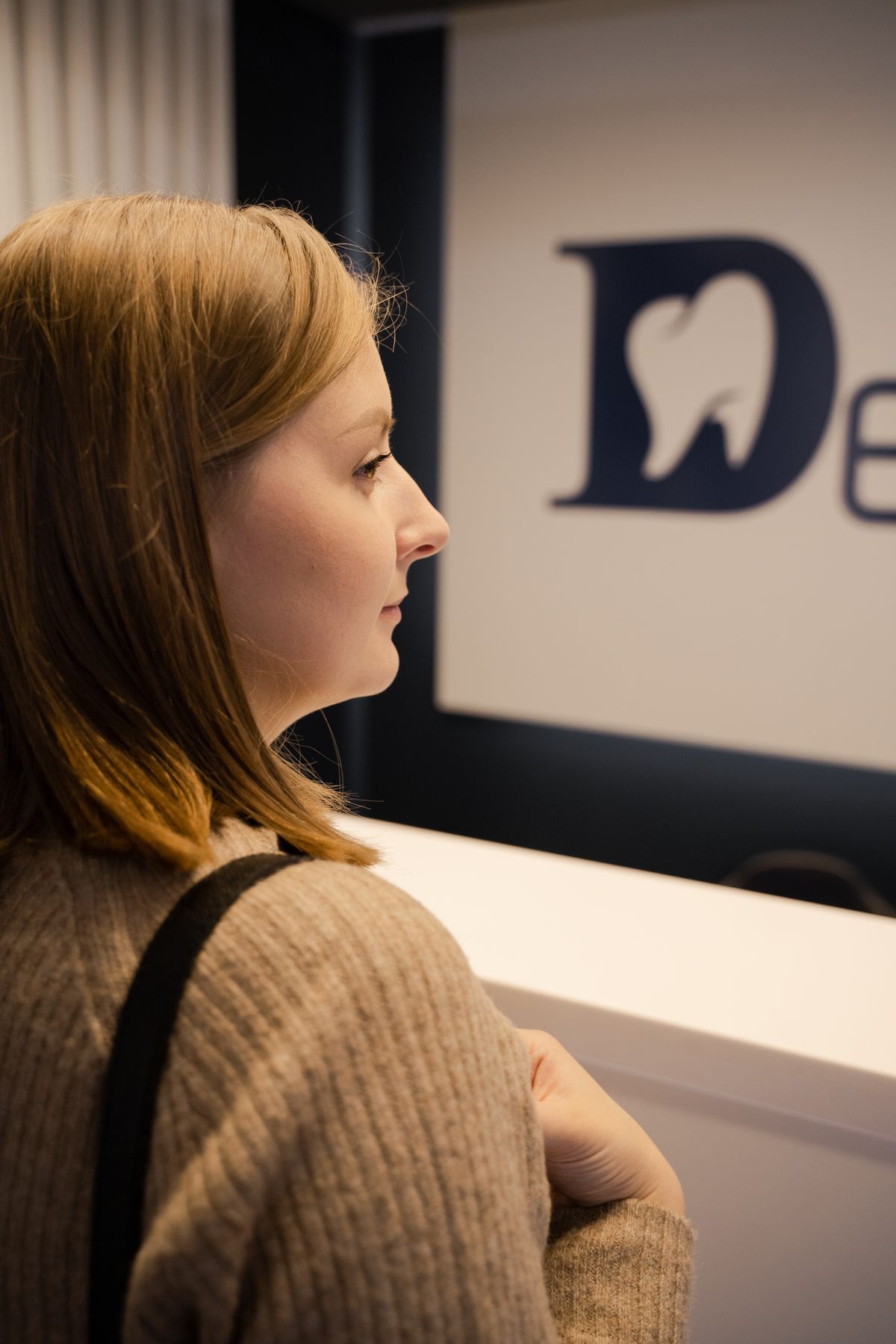
A dental office phone rings differently than a general medical line. Callers want to book a cleaning around a Dentrix opening, confirm whether a plan covers a crown, or reschedule because of a snow day, and every call competes with a hygienist standing at the front desk waiting for a chart. That’s the gap AI receptionists built for dentistry are trying to close in 2026, and three tools come up again and again: Rondah AI, My AI Front Desk, and Retell AI. This guide compares them on what actually matters to a dental practice: PMS integration, appointment reminders and no-shows, new-patient intake, and real cost.
Key Takeaways
– Rondah AI is the most dental-native option here, built by founders who grew up working the front desk and back office of a family-owned dental practice, with bi-directional Dentrix integration and multi-location reporting. It doesn’t publish pricing; budgeting requires a sales conversation.
– My AI Front Desk (rebranded Frontdesk) is the lowest-cost, fastest-to-start option, but its cheapest $20/month plan doesn’t answer phone calls at all. Voice requires the $99/month Business-in-a-Box tier.
– Retell AI is a developer platform, not a turnkey receptionist. It fits a multi-location group with IT support or an agency partner far better than a solo practice owner configuring a phone agent alone.
– Automated reminders have a documented track record on no-shows specifically in dental settings: a Sesame Communications analysis of 1.6 million dental appointments found a 22.95% reduction after implementation.
– None of the three publishes independently audited support or PMS-integration benchmarks; treat vendor-stated figures (Rondah AI’s support response time, case study results) as company-reported until you verify them yourself.
This page contains affiliate links. If you purchase through them, we may earn a commission at no extra cost to you.
What Actually Matters When You’re Comparing These for a Dental Practice
Generic “AI receptionist” comparisons miss the details that decide whether a tool works in a dental office. Before you look at any pricing page, get clear on four things:
- Does it write to your PMS, or just read it? A tool that can check an opening in Dentrix, Open Dental, Eaglesoft, or Denticon but can’t book into it still leaves your front desk finishing the job.
- Does it handle new-patient intake, not just existing-patient scheduling? A first-time caller needs insurance capture, a form sent, and often a longer slot blocked.
- What’s the actual no-show story? Reminder cadence and channel (text vs. call) vary by vendor.
- What does it cost once you add the pieces you need? A headline monthly number rarely tells the whole story.
complete guide to AI receptionist tools
Rondah AI: Built for Dental, Not Adapted to It
Rondah AI leads this list because it’s the only one of the three built specifically, and only, for dental practices. The founders, Burhan Syed, Mohammed Mian, and Allan Svirsky, grew up working the front desk and back office of Svirsky’s family-owned dental practice, and the product is named after Rondah, the receptionist who ran that office for 15 years (Rondah AI, retrieved 2026-09-06). That’s a meaningfully different story than “built by dentists”: the founders lived the operational reality of a dental front desk (no-shows, insurance calls, overbooked chairs) without themselves being dentists.
That grounding shows up in the product. Rondah AI answers calls 24/7, books and reschedules directly into a practice’s PMS with Dentrix named specifically as a supported integration, and configures per-location workflows rather than shipping one generic script across every office. For multi-location dental groups and DSOs, it adds an “Operations Command Center” that surfaces scheduling gaps and underutilized chairs across a whole portfolio, useful once you’re running more than a couple of locations.
Rondah AI’s support model is built around direct access rather than a ticket queue: the company states customers can reach its team by call, text, or email, with a stated response target of around 15 minutes. That figure is company-reported, not independently benchmarked. The same caveat applies to Rondah AI’s published case studies, including a stated $420,000 in new revenue in Q1 2026 for a client called Independence Dental and 2,500 after-hours appointments booked across 34 practices, real numbers from the company’s own marketing, not an outside audit.
The catch: Rondah AI does not publish pricing anywhere. There’s no rate card, no per-location number, no free tier. Getting a figure means booking a sales call, and the DSO-oriented positioning suggests pricing scales with location count and call volume rather than a flat SKU. Rondah AI is backed by a Techstars 2024 cohort placement and a $1.8M pre-seed round led by 2048 Ventures (2048 Ventures, retrieved 2026-09-06), institutional backing that suggests staying power, though it says nothing about whether the pricing fits a solo practice’s budget.
My AI Front Desk: The Lower-Cost Option, With a Real Catch
If Rondah AI’s lack of public pricing is a dealbreaker, My AI Front Desk (now rebranded Frontdesk) is the most transparent alternative on cost. Its pricing page lists two relevant tiers: Basic at $20/month ($16/month billed annually) and Business-in-a-Box at $99/month ($79/month billed annually). The detail that trips up practices comparing on price alone: Basic includes zero voice minutes, chat, SMS, and email only. A practice evaluating this as a way to stop losing patients to an unanswered line needs Business-in-a-Box, which includes 200 voice minutes per month alongside 100 chatbot conversations, 400 SMS messages, 500 email drafts, and 20 outbound calls per day.
There’s a 7-day free trial on paid plans (no credit card required), enough time to test call handling against a real dental script (insurance questions, new-patient intake, a reschedule request) before committing. Usage beyond the plan’s allowance draws on a credit system: roughly $0.01/credit, with a voice minute costing about 25 credits (~$0.25/minute) and an SMS message about 4 credits (~$0.04/message). Model a busy month before assuming the flat monthly number is your real cost.
My AI Front Desk isn’t dental-specific: it markets to medical, dental, and mental-health practices alike, and its public pages list no dedicated PMS integrations or HIPAA/BAA documentation as of this writing. That makes it a reasonable fit for a solo or small dental practice wanting the fastest, cheapest fix, and a weaker fit for a practice that needs verified two-way Dentrix or Open Dental integration out of the box.
Retell AI: For Practices With a Developer, Not Without One
Retell AI belongs on this list because it shows up constantly in “best AI receptionist” roundups, and just as constantly gets misdescribed as a plug-and-play product. It isn’t one. Retell AI sells the underlying voice AI infrastructure (speech-to-text, a language model, text-to-speech, and telephony) that a developer or vendor partner assembles into a working phone agent. Pay-as-you-go pricing starts at $0.07/minute for voice infrastructure alone, but once you add the language model, text-to-speech, and telephony components a live call needs, real all-in cost typically runs $0.13 to $0.31 per minute.
Where Retell AI earns its reputation is technical flexibility and compliance posture. It offers a self-serve HIPAA Business Associate Agreement on every tier, including pay-as-you-go, not gated behind an Enterprise contract, which is unusual in this category. It holds a 4.8-out-of-5 rating on G2 from a large volume of reviews, and its own healthcare content claims sub-second (around 600ms) response latency, with native Cal.com and Google Calendar booking built in.
For a dental group with an IT contractor, or an automation agency building phone agents across client practices, that flexibility is worth the setup investment. For a solo dentist configuring a phone agent between patients with no developer help, it’s the wrong starting point: the learning curve is a recurring complaint in Retell AI’s own G2 reviews.
Dental-Specific Scenarios: Where Each Tool Actually Helps
Appointment reminders and no-show reduction. This is one of the more evidence-backed use cases in the category. A Sesame Communications analysis covering 1,604,184 appointments across 64 dental practices over five years found automated appointment reminders reduced no-shows by 22.95%, with $31,456.88 in incremental production tied to improved schedule compliance (Dental Tribune U.S., Dental Tribune U.S. Edition, Vol. 8, No. 2, published 2013). That study predates any of the three tools covered here, so treat it as evidence for reminder automation as a category, not a benchmark for a specific vendor.
Insurance and PMS integration. This is the sharpest line between the three. Rondah AI names Dentrix specifically and states its integration is bi-directional: the AI can see real openings and write bookings, not just look them up. My AI Front Desk and Retell AI don’t advertise dedicated dental PMS connectors out of the box; getting either to talk to Open Dental, Eaglesoft, or Denticon means building that integration yourself or through a partner.
New-patient intake calls. A first-time caller needs more than a slot on the calendar: insurance capture, a longer appointment block, and often a new-patient form. Rondah AI’s per-location workflow configuration is built to handle intake steps like this; My AI Front Desk’s chat and SMS layer can handle intake-adjacent tasks even on lower tiers, though voice-based intake requires Business-in-a-Box.
How to Choose Between These Three
There’s no single “best” answer, only a best fit for your practice’s size and systems. A multi-location group or DSO needing verified two-way Dentrix integration is the clearest match for Rondah AI. A solo or small practice wanting the fastest, cheapest fix fits My AI Front Desk better, budgeting for the $99/month tier for voice. A group with in-house IT or an agency partner wanting full control over the voice stack is the right audience for Retell AI, not a solo owner hoping to self-configure a phone agent in an afternoon.
Whichever direction you’re leaning, get a live demo against your actual PMS before signing anything, and confirm what a first-time caller’s experience looks like — that’s where the difference between these tools shows up fastest.
Frequently Asked Questions
Is Rondah AI only for dental practices?
Yes. Rondah AI is built specifically for dental practices and DSOs, with PMS integrations and per-location workflows designed around dental scheduling. It isn’t positioned as a general medical or mental-health tool the way My AI Front Desk is.
Which of these three is cheapest for a solo dental practice?
My AI Front Desk has the most transparent low-end pricing, but its cheapest plan ($20/month) doesn’t answer phone calls at all. Voice starts at $99/month (Business-in-a-Box). Retell AI’s usage-based pricing ($0.13–$0.31/minute all-in) can be cheaper at very low call volume but requires technical setup a solo practice typically can’t do alone. Rondah AI publishes no pricing at all, so it can’t be compared on cost without a sales call.
Can AI receptionists actually reduce no-shows for a dental practice?
Automated reminders are one of the better-documented interventions here: an analysis of over 1.6 million dental appointments found a 22.95% reduction in no-shows after implementation. That figure comes from reminder automation broadly, not a single vendor in this guide, so confirm a tool’s reminder cadence and channel before assuming a similar result.
The Bottom Line
For a dental-specific, PMS-integrated build, Rondah AI is the strongest fit, with the tradeoff that you won’t know the cost until you talk to sales. If budget certainty matters more than dental-native integration, My AI Front Desk is the more transparent, lower-cost starting point, as long as you budget for the $99/month tier to actually answer calls. If your practice has developer resources or an automation agency partner, Retell AI’s flexibility and self-serve HIPAA BAA make the setup investment worth it. For the fuller picture across medical, dental, and mental-health practices, see our complete comparison guide before you book a demo.